About Blue Hills Reservation
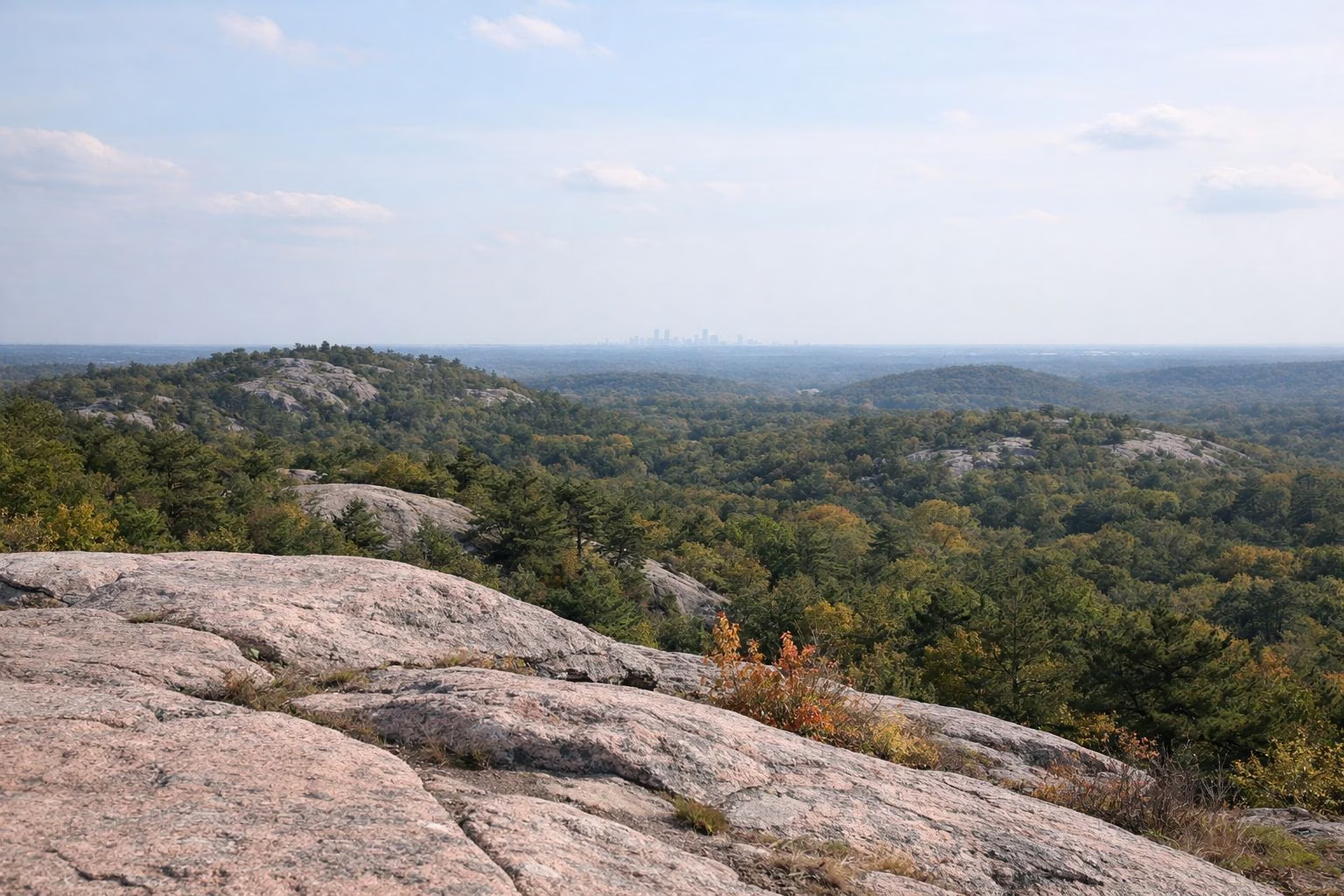
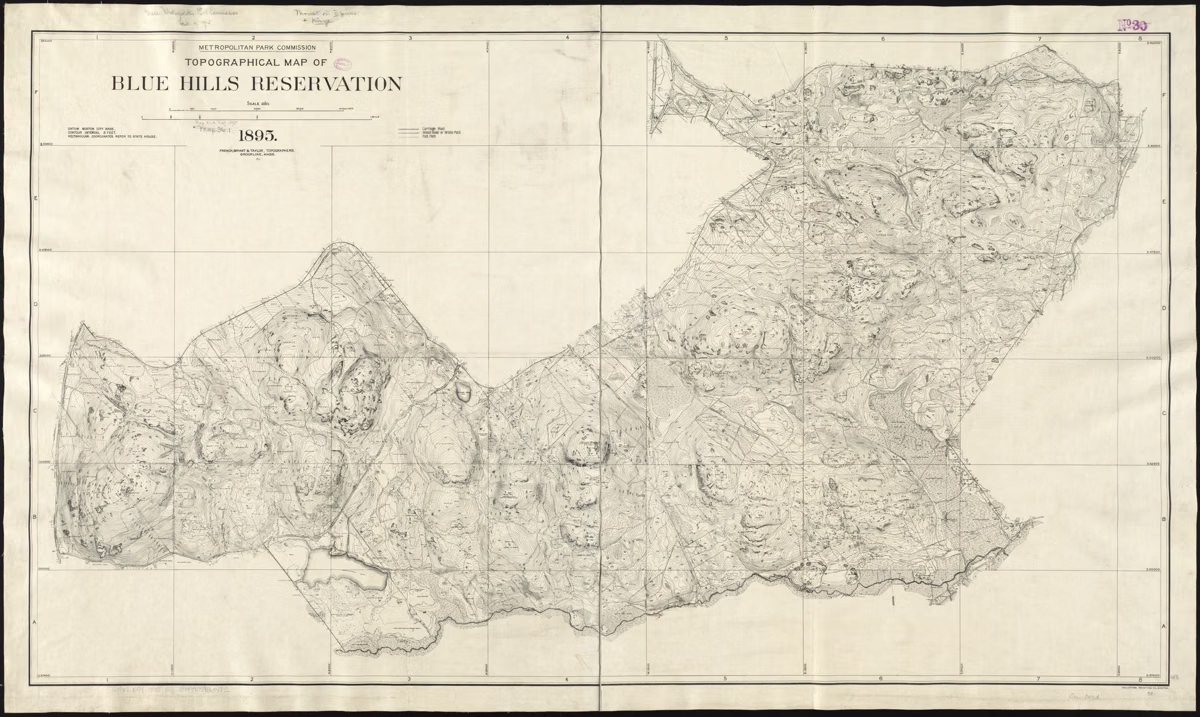
Blue Hills Reservation is a 7,000+-acre state reservation just south of Boston, stretching across Milton, Quincy, Canton, Randolph, Braintree and Dedham. It's managed by the Massachusetts Department of Conservation and Recreation (DCR), and DCR calls it the largest open space within 35 miles of Boston. The state bought the land in 1893, making it one of the first parks in the Metropolitan Parks System.
Where the Name Comes From
DCR says early European explorers named the Blue Hills after the bluish color they saw on the slopes from their ships along the coast. Long before that, the Massachusett people lived in these hills. DCR says they called themselves Massachusett, or "people of the great hills."
The Land
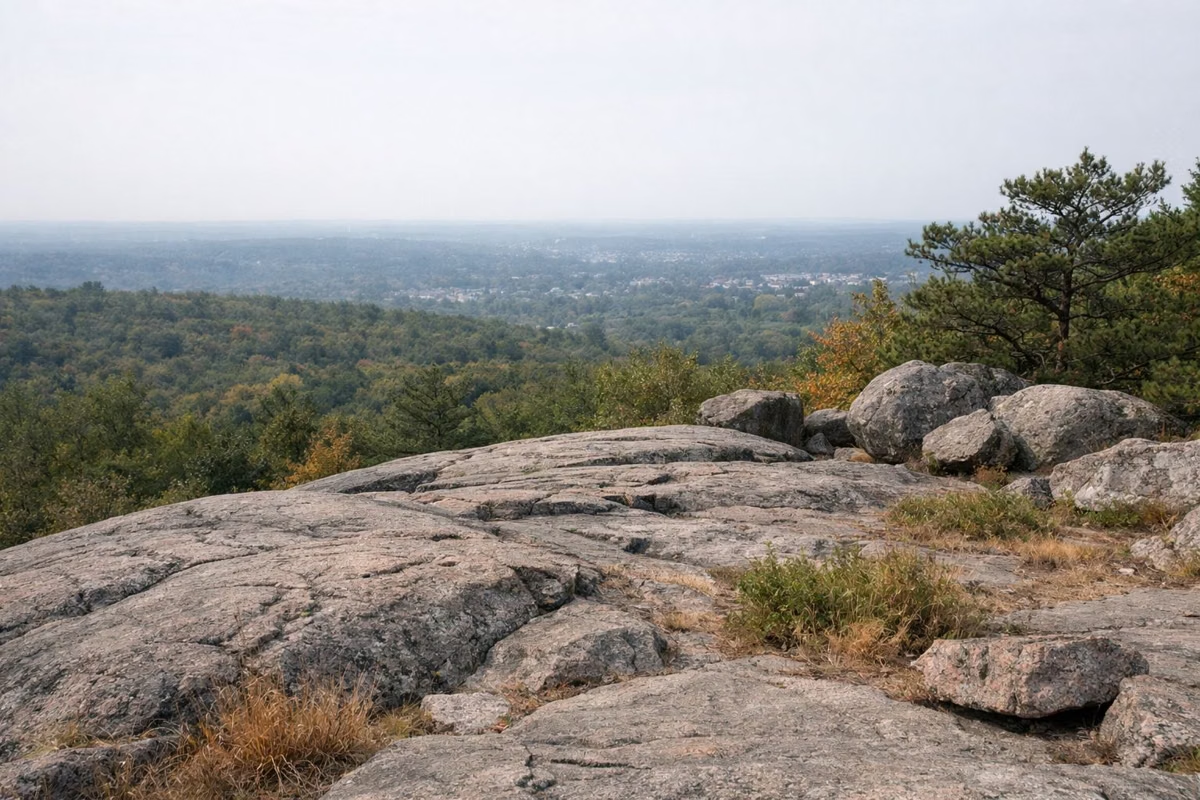
The range is a chain of 22 hills, with Great Blue Hill the highest at 635 feet. DCR's map explains that the hilltops are the remains of volcanoes that erupted about 440 million years ago and then collapsed. In the last ice age a glacier scraped and polished the summits, leaving thin soil, and scooped out the basin that became Ponkapoag Pond and its bog.
Today trails cross rocky summits, upland and lowland forest, meadows, swamps, pond edges, vernal pools and an Atlantic white cedar bog. Many of the oaks, hickories and white pines are more than 100 years old. DCR says spongy moths and drought have killed some trees in recent years, and that the forest's variety of species is its best defense.
Wildlife
DCR counts more than 160 bird species in the Blue Hills over a year, including eastern towhees and prairie warblers on the brushy hilltops and hawks and turkey vultures migrating overhead in spring and fall. Coyotes live here too. The reservation is home to 13 species listed as endangered or threatened in Massachusetts, among them small populations of timber rattlesnakes and northern copperheads. Both are protected by state law and, DCR says, avoid people.
History
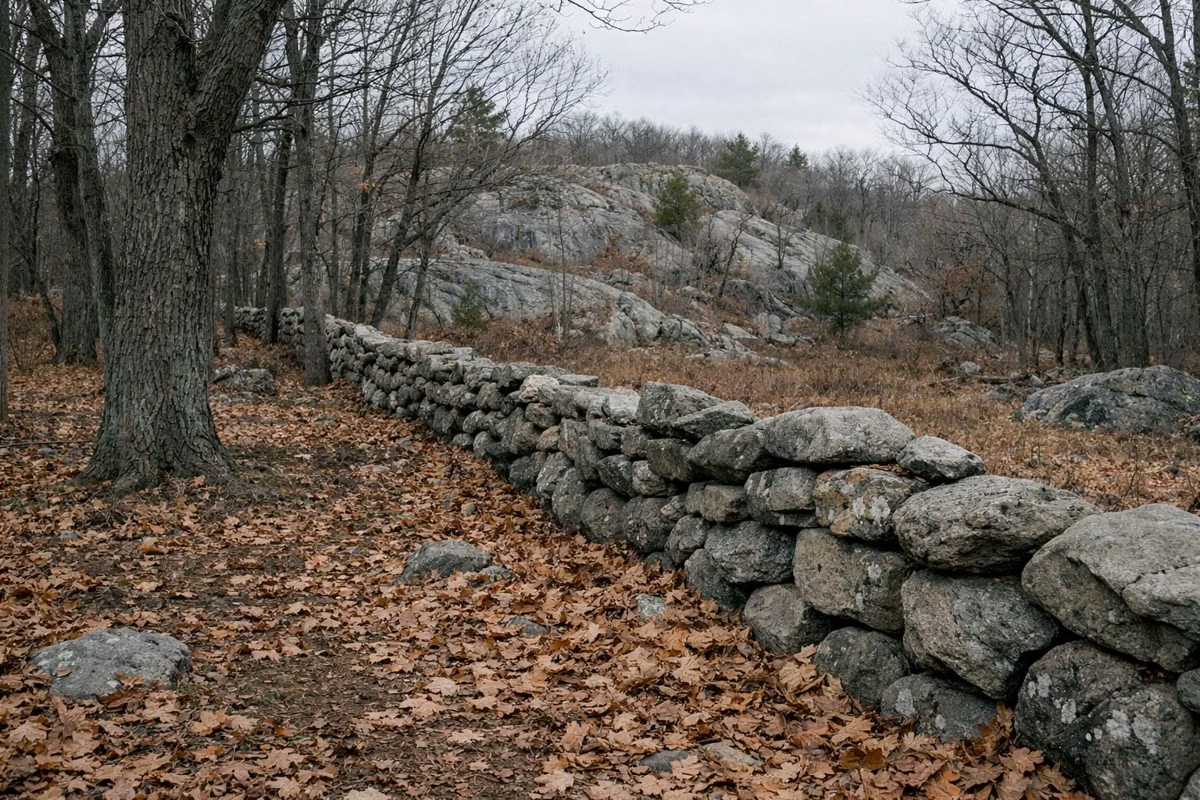
Archaeological evidence shows people have lived in the Blue Hills for more than 10,000 years, and DCR counts more than 50 prehistoric sites in the reservation. English colonists arrived in the 1600s and used the hills as a landmark, cleared fields, grazed animals and cut timber. The hills' granite went into buildings in Boston and nearby towns.
West Quincy became the center of that trade. In 1825 its granite was chosen for the Bunker Hill Monument, and the Granite Railway was built in 1826 to haul it. More than 50 quarries worked in Quincy over the next 140 years. The last one closed in 1963. The story is on our Quincy Quarries page.
Landscape architect Charles Eliot (1859–1897) pushed for a regional park system around Boston that would protect beaches, river banks and high ground for everyone. The Blue Hills were one of the first purchases of the new Metropolitan Parks System in 1893. DCR says that system has grown into more than 450,000 acres of state parkland. The stone tower on Great Blue Hill is named for him.
In 1885, before the reservation existed, the Blue Hill Observatory began recording the weather on the summit every day. It has never stopped, and it's now a National Historic Landmark.
During the Great Depression, the Civilian Conservation Corps lived and worked in the Blue Hills from 1933 to 1937. They built two stone observation towers, ski runs on Great Blue Hill and miles of trails. The foundations of their camp, east of Randolph Avenue, are still in the woods.
The reservation also holds historic buildings listed on the National Register of Historic Places (DCR's 2026 map counts 15), including the English-style barn at Brookwood Farm, dated to about 1791.
The Blue Hills Today
DCR describes the Blue Hills as a four-season park. People come to hike and mountain bike, swim at Houghton's Pond, ski on Great Blue Hill, paddle and camp at Ponkapoag Pond, climb at the Quincy Quarries, and visit the Trailside Museum. Friends of the Blue Hills, a volunteer nonprofit founded in the 1970s, helps maintain trails and runs free family events.
For official notices, closures and programs, see DCR's page for the reservation. To plan a trip, start with hours and fees, parking and the trail map.
How This Site Checks Facts
This is an independent visitor guide to Blue Hills Reservation. It is not run by or affiliated with the Massachusetts Department of Conservation and Recreation (DCR).
Hours, fees, rules and trail figures are checked against the DCR page for Blue Hills Reservation. Where this site and the agency differ, the agency is right.
If something here is out of date, please tell us through the contact page.